Poet on fire escape

The best thing – indeed the only redeeming feature – of a snippy and essentially homophobic review in the New York Times of the new Selected Poems of Frank O’Hara (edited by Mark Ford) is this photograph, taken in 1958 by Harry Redl. If you really want to read what someone called William Logan thinks of O’Hara – when you could be reading the man himself – you can go and look up the review itself. In the meantime, the piece below is the third section of his Ann Arbor Variations, and contains a fleeting reference to a fire escape.

3
The alternatives of summer do not remove
us from this place. The fainting into skies
from a diving board, the express train to
Detroit's damp bars, the excess of affection
on the couch near an open window or a Bauhaus
fire escape, the lazy regions of stars, all
are strangers. Like Mayakovsky read on steps
of cool marble, or Yeats danced in a theatre
of polite music. The classroon day of dozing
and grammar, the partial eclipse of the head
in the row in front of the head of poplars,
sweet Syrinx! last out the summer in a stay
of iron. Workmen loiter before urinals, stare
out windows at girders tightly strapped to clouds.
And in the morning we whimper as we cook
an egg, so far from fluttering sands and azure!
Posted in frank o'hara | Leave a comment

(Anti-) conspiracy theorists swarm at harmless blog

The numbers of visitors to this blog increased exponentially yesterday. A wave of sudden interest in my new collection of stories, to be published by Salt in October? (Pre-ordering facilities available here.) Well, no. Nothing so flattering, or wise.

The posts that get most attention generally have something more prurient to recommend them (although my story Nipples might be just what some of them are looking for. It’s in my new collection of stories, to be published…). On David Isaak’s advice I entitled one post Hot Sex in San Francisco, and a lot of people looking for naughtiness must have been disappointed by the image of a rather elegant Art Deco façade. I’m also used to the post showing Berlusconi as nature intended (apart from the hair transplant, face lift and liposuction) getting an inordinate amount of attention, and yesterday was no exception.

But what really pulled the punters in is a post I wrote ages ago about the third tower at the WTC site and the mystery surrounding its collapse. It was my only foray into conspiracy theory territory and I was soundly told off by someone who led me into a world in which Robert Fisk is regarded as a dangerous god-hating commie sodomitic lunatic, so clearly a man to be trusted (how transparent does irony need to be? I love Robert Fisk!).

What I’d like to know – because I’m really not that obsessed by 9/11 – is what happened yesterday to make so many people google third tower and end up on my blog. Any ideas?

Update: OK, now I know why. BBC2 is showing a documentary about the third tower tomorrow night, and my post comes up on the first page of Google searches. Living abroad, I can’t download BBC stuff (and if anyone knows how this might be circumvented I’d be very interested to hear), so I won’t be watching it.

Posted in robert fisk, san francisco, third tower | Leave a comment

A piece of shit

A salutary piece by Anne Enright on how we love – and hate – what we write can be read here. Struggling with what is unlikely to be the final draft of my new novel, I feel what she says with a certain keenness. Or should that be keening?

The title to the post is a quote from Enright’s article, by the way, not a comment on it. Au contraire.

Posted in anne enright, writing | Leave a comment

Good riddance to …


… Jesse Helms. Is he wearing lipstick in this photograph? Or did his mouth always look like a badly sliced tomato?

“Just think about it – homosexuals, lesbians – disgusting people – marching in our streets, demanding all sorts of things including the right to marry each other and the right to adopt children. How do you like (that)?” he said.

That’s from The Independent. And look at this from The Guardian:

For all his political posturing, however, Helms repeatedly showed himself inept at the tedious business of shepherding legislation through Congress.

The Senate’s tradition of choosing committee chairmen by seniority eventually brought him to head the agriculture committee (1981-87). It should have been an enviable chance to promote North Carolina’s farming and tobacco interests, which employ half its people. Yet the state, ranked eleventh by population, had one of the nation’s highest poverty rates and lowest levels of federal funding.

Helms contributed his share to this misery with his ownership of rented houses in poor black districts of Raleigh. Some tenants reported that his properties had been without adequate heating for 30 years. The city’s building inspectors repeatedly issued summonses against Helms to remedy a wide range of dilapidations, from rotting floors to leaking pipes.

Posted in good riddance, homophobia | Leave a comment

Laurent Bonomo and Gabriel Ferez

Police last night said the men might have died for the sake of two handheld games consoles.

Posted in Uncategorized | Leave a comment

FAO interview

The following interview appeared in FAO In Touch, the in-house newsletter of the Food and Agriculture Organisation where I (and, coincidentally, Carol, the narrator of Little Monsters) work.

FAO editor publishes critically acclaimed novel

‘I was in Turin and saw students being kneecapped, friends arrested’
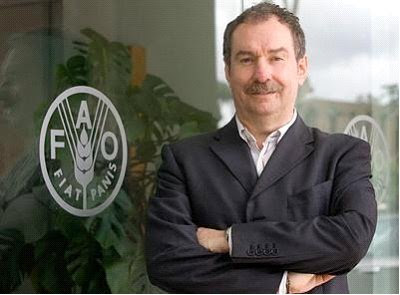
      Story to tell: Charles Lambert combines writing with editing and teaching

Some people have a knack for using their spare time productively. Take Charles Lambert, for example.

A freelance editor in FAO’s Field Operations division, Lambert lives in Fondi, a town about halfway between Naples and Rome. He takes a train three times a week to Rome where he also teaches English at Roma 3 University. A busy enough schedule, one would think, but over the past ten years Lambert has also found time to write seven full-length novels.

Little Monsters is the latest, published earlier this year by Picador. It is a surprisingly insightful portrayal of an abused and neglected child who grows into a psychologically complex woman. The twists of fate that buffet and damage her make for compelling reading. Other characters are equally well drawn, if not always endearing. Painstaking attention to the values, mores and physical details of period and place make the story feel sharply real.

Beryl Bainbridge, one of modern England’s literary lions, was unambiguous in her comment on Little Monsters: “Charles Lambert is a seriously good writer.” His story The Scent of Cinnamon was selected as one of the O. Henry prize stories for 2007.

FAO InTouch met with Lambert and asked him a few questions about his FAO connection.

How did you get started editing FAO project documents?
It was at least ten years ago. I was very lucky in a way. A friend of a friend of mine was given a rush job, but he was going to be away on holiday and gave them my number. I remember it was a TCP project document – I think it was for Somalia – and it had to be done quickly. That started it and I’ve been doing it ever since. TCPs, GCPs, big contracts, small contracts.

What are the main challenges in your work?
Well, often project documents and reports are written by people who are not active speakers (of English). Documents can be very repetitive, with a lot of “padding out”. Or, they may be too technical. The people who are going to read a document don’t need to know the quantity of fertilizer used at every project site, for example. Sometimes a document is undiplomatic, critical of the member government. Over the years I’ve learned how to correct a lot of these problems in a text. I work for Savita Kulkarni in TCOM. Savita is an exceptional editor with very high standards. I’ve learnt a great deal from her.

How have things changed since you started in 1998?
The responsibility of editors is now greater than in the past, because layers of “pre-editing” have been removed due to budget cuts. There was the change in the word processing programme: it used to be WordPerfect 5.1 and it was horrible. I’d work at home and bring it in and have to reformat everything. Now everything is by email. There used to be more interaction with people – it’s almost entirely electronic now. And the level of security at FAO has made a difference. While I understand the need for security, I resent having to wait for someone to collect me at reception.

What things have stayed the same?
Well, there’s the fact that there hasn’t been an increase in editing fees since I started . . .

Really?
Really.

Writer, university instructor, editor. What qualifies you for these three jobs?
I grew up in the Midlands of the UK basically, and then did English at Cambridge University. I spent a year not doing much, then heard of an opportunity teaching in Milan with a friend. Then Turin, then England again, then Portugal, then 15 months in publishing in the UK, working as an editorial assistant. I tried Modena in Italy and those were two of the best years of my life, teaching English at a language school there. Then I decided I wanted to teach in a university and applied to several. I was hired at La Sapienza here in Rome, moved to Rome in 1982 and I’ve been here ever since.
Picture (Metafile)

What’s Fondi like?
There’s a description in Dickens, in Pictures from Italy, and it’s not complimentary. But now it’s packed with bed-and-breakfasts and is a very attractive town.

What should we expect from you next?
At the moment I haven’t got much time to write. It’s all promotion, networking. But I have six other novels in a drawer. The one before Little Monsters is set in Rome. It’s a bit of a novel about what one does with a terrorist past. In the 1970s I was living in Turin, and I saw students being kneecapped, friends being arrested. It’s set during the five days of (U.S. President George) Bush’s visit in 2004. Picador is set to make an offer for that one. I have a very good editor at Picador. We’ll see.

Little Monsters can be ordered through Picador and is available at the Food for Thought bookstore at FAO Headquarters. For more about Charles Lambert, check out his blog.

Posted in interview, little monsters | 3 Comments

Indecent? No, too much salt…

This is the Heinz ad you won’t be seeing on television, because 200 people complained, so you may as well see it here. (This is four times the number of people who complained about Joan Rivers calling Russell Crowe a ‘fucking shit’ on Loose Women. Make of this what you will, but Loose Women is daytime TV and Heinz ads are on every fucking hour of the day.)
http://www.youtube.com/v/kAKYpUo18wU&hl=en
Hmm. I’m not totally happy about ‘Mum’.

Posted in food, homophobia | 5 Comments

The line of beauty


I have The Age of Uncertainty to thank for pointing me to this fabulous clip. I wonder how many artists (in Dalì’s case, I use the word advisedly) would be recognised on the equivalent of What’s My Line? today. Damien Hirst?

Posted in art, television | 1 Comment

Summer reading

If you’d like to know my views on holiday reading – and let’s face it, who wouldn’t? – you can find them on the Picador blog by clicking here.

(I thought it might be nice to illustrate this post with a summery image, so I entered ‘summer’ into Google images. But I must have mistaken the language because what I got was a page of scantily-dressed lovelies, as the redtops used to have it.)

Posted in blogs, picador, reading | Leave a comment

Something apt from Dover Beach

Ian McEwan has just come out against Islamism*, as he calls it. I’m not sure what distinguishes Islamism from Islam, other than the generally derogatory aura created by the suffix ‘ism’, but that’s by-the-by. He’s quoted as saying: “I myself despise Islamism, because it wants to create a society that I detest, based on religious belief, on a text, on lack of freedom for women, intolerance towards homosexuality and so on – we know it well.” Absolutely, Ian, and I couldn’t agree more.

I read about these comments in today’s Independent on Sunday, which also contains a list of the 101 most influential gay people in Britain. Thirty years ago, it would have been hard to find ten, and they’d have been artists or in show business (I’m thinking Danny La Rue). The list certainly wouldn’t have included business executives, rabbis, EU commissioners, rugby union referees or senior policemen. Coincidentally, the IoS reports that, in Saudi Arabia, 21 young men have just been arrested for the sin of homosexuality. They were rounded up in Qatif last Friday by the religious police, not a force that would have welcomed Brian Paddick with open arms, one imagines, who operate under the aegis of something called the Commission for the Propagation of Virtue and the Prevention of Vice, a typically grandiose name for the usual befrocked gang of bigoted thugs that tend to run these things. The young men arrested can expect to be flogged or worse. Maybe they should seek asylum in an allied state.

What I can’t understand is why the IoS should consider McEwan’s views to be an ‘astonishingly strong attack’. In a country which still pays lip service to ideas of sexual equality, freedom of speech, recognition of gay rights, rational argument rather than revealed truth, etc. they seem to me to be astonishingly mild. If this is ‘hate speech’, it would be interesting to know in what way the crime distinguishes itself from the surely licit act of uttering a list of simple truths expressed in objective terms. Would any Muslim argue that Islam isn’t based on religious belief, on a text, on lack of freedom for women, intolerance towards homosexuality, but on the opposite of these things – moral relativism, empirical observation, equality for all regardless of sex and sexual orientation? Wouldn’t that be seen as apostasy?

Maybe it’s just because McEwan prefaced the list with the verb ‘detest’. So ‘hate crime’ is nothing more than a statement of fact preceded by the word ‘I’ and a synonym of ‘hate’? In that case, we’re all in the shit. What about if I announce that I’m not that keen on people from the land of Nokia. Would the Finnish ambassador have a case against me?

Ian McEwan may be a public figure, but he hasn’t been elected, doesn’t depend on public money and represents no one but himself. He certainly wouldn’t defend himself by claiming to represent the word of God – unlike, say, homophobic MP Iris Robinson, who seems to have forgotten that ten percent of her constituents may not appreciate being called loathsome. Oh sorry, Iris. Love the sinner, hate the sin. Tell that to Robinson’s cronies in Saudi.

*The quotes come from an interview given to the Italian Corriere della Sera, so this may be a trans-language hiccup.

Posted in homophobia, ian mcewan, iris robinson, islam | 5 Comments