Sharia hits fan

Archbishop of Canterbury, Rowan Williams, has created a brouhaha after suggesting on Radio 4 that the acceptance, or ‘accommodation’, in the UK of some aspects of Sharia law might be ‘unavoidable’. This is already the case, apparently, with Sharia courts in Britain dealing with thousands of cases involving marital or financial disputes, without a whiff of fundamentalist alarm. So Williams’ possibly slightly regretful recognition of the fact is a bland enough position to hold and wholly in line with the Anglican church’s take on the world as something you can’t do very much about, so why not rub along with it. Accommodation is all.

For the tabloids, though, his comments were tantamount to endorsing mutilation in public squares, mass infibulation and obligatory burkhas for all Page Three models. In their Talibanesque way, they want his head, his blood, and any other essential organs going, though what constitutes essential for an archbishop is material for theologians rather than lay thinkers. They accuse him of wanting to destroy Britain, a place they happily execrate, day in day out, for its appalling youth, corrupt government, filthy manners and fondness for employing Polish plumbers and paying them under the table.

Yet what on earth should someone like Williams say? Hang the infidels? Re-impose tithes? Make everyone sing Kumbaya with a cheesy smile, wearing Cliff Richard tee-shirts? He’s a major religious figure, after all, so it’s part of his remit to believe that state legislation should represent ethical choices. He’s also, by all accounts, an ecumenical type, so can hardly pretend that the only valid ethical choices are Anglican. Ergo, he’s shafted.

Perhaps all this fuss will persuade people that no religious belief of any kind should be allowed to interfere with the law, which represents and defends all members of a society regardless of their household gods, and which should have no truck with the kind of nonsense religious leaders – invariably old, invariably male, all too frequently celibate – spout with such punitive abandon.

If this is true for lapidation and the chopping off of hands, it’s equally true for the malicious interference of, for example, the catholic church in the business of countries like Spain and Italy. Let’s face facts. If you let one bossy old know-all into the legislating chamber, you open the door to the whole damn gang.

Posted in islam, politics, religion | 3 Comments

Returns

I’m off to England for the weekend to celebrate my mother’s 92nd birthday.

See you next week.

Posted in birthday, mother | 6 Comments

Home from home

Occupied with more pressing matters, Berlusconi won’t be grieving beside his mother’s tomb on a daily basis. He’s done the next best thing. He’s had her buried between a stand-up comic and Wanda Osiris, soubrette.

Posted in berlusconi | 2 Comments

It’s the money, stupid

Clemente Mastella, ex-minister of justice and the man who brought down Prodi’s government, isn’t just a consummately self-regarding politician. He’s also a newspaper editor. Like all Italian parties, UDEUR, Mastella’s gang of hangers-on, cronies and relatives, has the right to its own state-financed newspaper, to ensure that the information available reflects all points on the political spectrum (yes, right). It’s called Il Campanile (The Belltower) and it costs the Italian taxpayer the tidy sum of €1,331,000 each year. Of the 5,000 copies printed each day, 3,500 never leave the printers while the others are binned by news kiosks. A newsagent near the House of Deputies claims never to have sold a single copy.

But the money has to be spent somehow. Let’s see how: among the employees of Clemente Mastella, editor, is Clemente Mastella, journalist. Cost: €40,000 a year. Then there are travel expenses, because a newspaper needs to keep its finger on the local pulse. Annual cost (2005): €98,000. Most frequent beneficiaries: Sandra Lonardo Mastella (wife, and under investigation for collusion), followed by Elio and Pellegrino Mastella (sons). You can’t fly everywhere, of course, so Pellegrino needs to fuel his Porsche Cayenne. He does it at the family’s local petrol station. Cost (charged to Il Campanile): €2,000 every month. That’s nothing compared to the money spent on public relations: €141,000 a year, plus €22,000 on gifts like chocolate and nougat from a small town in Clemente’s home territory, Summonte, the birthplace of Mastella’s sister-in-law and her husband, UDEUR deputy Pasquale Giuditta.

The main offices of Il Campanile are in Rome, in a rented building that used to belong to the state. Its new owners? Pellegrino and Elio Mastella.

At the last elections, UDEUR won 1.4% of the vote.

(My thanks to Susanna for passing this information onto me, and to Mauro Montanari of Corriere d’Italia/news ITALIA PRESS, who put it all together.)

Posted in corruption, italy, money, politics, prodi | Leave a comment

Used already!

The first second hand copy of Little Monsters to appear on the market can now be obtained from Loch Croispol Bookshop, the most north-westerly bookshop on the UK mainland, in the remote village of Durness. It’s a bound proof and should never have been sold, but let’s not make a fuss about it. It’s priced in dollars ($3.06) and you can buy it here.

I wonder who could have flogged it. And for what? A cup of tea and a scone?

Posted in little monsters | 2 Comments

Sue Barker’s beard

If, like me, you can’t stomach Cliff Richard you’ll enjoy this piece by Terence Blacker very much.

My mother used to say: If you can’t say anything nice, don’t say anything at all. How wrong she was.

Posted in music | 9 Comments

NQR

You may need to click on this to see it properly, but, believe me, it’s worth it. It comes from a revealing article by Robert Hudson in today’s Guardian, called Medical Confessions. I particularly like TEETH (Tried Everything Else, Try Homoeopathy).

It reminds me of the case notes that used to be kept at the Stoke on Trent Labour Exchange, where I spent six months of what would now be called a gap year signing people on, instead of being signed on myself. The interviewers didn’t use acronyms, so it’s lucky the notes never fell into the wrong hands (steer clear, Casetti!). Among the milder comments were ‘smells like sick’ and ‘unfuckable, even with bag on head’. I remember being shocked and irresistibly drawn to the things, rectangles of cardboard with yellow paper and a ragged cover, held together by one of those elasticated ribbons with the metal tag. I didn’t interview people myself, but I wonder if peer pressure would have worked its terrible way on me. Would I have been as cruel?

My job was to prepare the claim and collect the signatures every Thursday, standing at the desk all day as people queued. Those days it was cash; I’d give them a chit and they’d take it to the pay-out window. My worst client, though we didn’t call them clients or, even more indefensibly, job-seekers, was a Mr Ignazio, possibly of distant Asian origin, rumoured to be a karate black belt and dangerously, unpredictably irascible. My colleagues used to hide his claim and watch me root through the metal tray for it, increasingly panicked, while Mr Ignazio stroked the cutting edge of his hand.

Posted in homoeopathy, work | Leave a comment

Mug shot

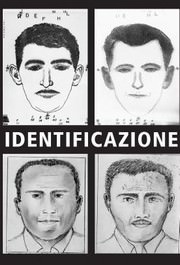
If you’ve spent more than a few days in Rome you’ll probably have left the traffic of Largo Argentina behind you and paused by the turtle fountain in Piazza Mattei and thought, for a moment, how wonderful it must be to live there and wondered how that might be possible, and smiled to yourself. You might have taken out your drawing stuff and sketched the way the boys reach up to guide the turtles towards the water, the turtles already free of the guiding hand. After which, on your way to the heart of the Ghetto along Via della Reginella, assuming – as I do – that you’re book-lovers, you’ll have paused a few dozen yards away, outside a bookshop to see what its trestle table has to offer. Usually, it’s a rum bunch of history books, fiction, a sprinkling of philosophy, mostly, but not entirely Italian. You may have decided to see what else the bookshop has to offer and wandered in. If you’ve bought anything, which is likely – because you can’t resist – you’ll have met the bookshop’s owner, Giuseppe Casetti, a tallish, slim man with long off-white hair and a slightly guru-ish air about him.

Casetti’s a character. He’s been kicking around Rome for decades in one form or another, usually, though not only, as a bookseller. He’s an anarchic sort of figure, linked to a series of artists, and movements, and events, and organisations. He was a friend of Frances Woodman, the American photographer, who killed herself when she was 23, when he called himself not Giuseppe, but Cristiano; he’s half-poseur, half-benefactor, poised between
nostalgie de la boue and an eye for the main chance. He’s dabbled in politics, and the art world, and made friends and enemies as people do. He’s not as pure, or as radical, as he imagines himself to be – he’s sentimental, for one thing, about the working class, and vain: I saw him at a Patti Smith concert some years ago in the Roman arena of Ostia Antica, swanning before the stage in a long white robe – but these are venial faults.

And now he’s in big trouble. Some years ago, he bought a bundle of moulding photographs from one of the people he buys stuff from; photographs that, apparently, had been thrown away by the police, dating back to the 50s and 60s. All kinds of stuff: mug shots, booty. He sat on them for years, finally deciding to organise a show in the space next to his bookshop, the ironically-named Museo del Louvre. He called on an old friend, Achille Bonito Oliva, to write the catalogue. Bonito Oliva, logorrheic as ever, obliged, citing Warhol and Nam June Paik. The show was set to hit the road two days ago. An article appeared in la Repubblica to pave the way.

It paved the way for someone from the Ministry of Fine Arts and, hot on his heels, the police. The photographs have been seized, along with Casetti’s computer and papers of all kinds. His entire stock has been confiscated, the shelves stripped, searches conducted behind them, as though the bookshop were owned by Al Qaida. Casetti is being treated like a criminal, interrogated, demeaned. I imagine that at some point they’ll be taking his photograph, full face and profile. He’s become the unwilling centre of his own show.

Casetti’s not worth the effort the police appear to be putting into this case. It’s as though some nerve has been touched. Official carelessness perhaps. Casetti’s past as a flip-flopping fellow-traveller of the left. Culture, the great pretender, to which one responds with a gun. Bonito Oliva, convinced of the centrality of art and of his own centrality within it, sniffs a rat. He’s going to be ‘writing something about it.’ In the meantime, a bookseller who has done nobody any serious harm, whose endeavour to keep alive an ember of modernism in a resolutely post-modern world is touchingly heroic, finds himself in a bookshop without a book.

Posted in art, freedom of speech, photography, politics | 5 Comments

Ross Leckie: Hannibal

One of the problems with historical fiction is that the reader is likely to have a fairly clear idea of what happens. This is particularly the case when the fiction deals with the illustrious dead. Novels about Napoleon and Marie Antoinette and Henry VIII may have a lot of incidental stuff to tell us, but the essential tension of fiction – will he die in exile? will she live? will he get married? – is necessarily absent.

There are ways around this, of course. The writer can take a leaf from Robert Graves’ Claudius novels, choosing a relatively minor figure and dividing the life into two. Alternatively, the book can portray the famous, about whom pretty much all is known, through the eyes of the real protagonists, as Mary Renault does in her wonderful novels about the adult Alexander and the Athens of Socrates and Plato. Other less scrupulous historical novelists have simply invented love affairs, illegitimate children, mysterious deaths, in an effort to sex the whole thing up.

Ross Leckie, in Hannibal (Canongate, UK, 2008), has chosen a more difficult option. There can be few readers who don’t already know that Hannibal tried to conquer Rome by leading his army, complete with elephants, across the Alps in winter, and that he failed. And, really, that’s all there is to it. So it’s a pleasure to be able to say that Leckie, with great skill, has taken this basic story – the Carthaginian leader’s campaign against the Roman empire – and created a novel that works not only as a picture of an unutterably foreign world and time but also as a page-turner.

The world the novel portrays, vividly and with impressive detail, is Hannibal’s, from his childhood to his death. Hannibal’s world is war, and the violence of the novel, gruesome, unrelenting and explicit, is rooted in the logic of war. From the opening scene, in which a Roman envoy loses his nose and tongue, to the almost off-hand way in which Hannibal slaughters more than 4,000 of his own men for their own good; “Without me, they would have been crucified by the Romans”, the novel never loses its power to shock.

But what transforms the book from a mere account of a bloody and doomed campaign, however adroitly written, into something more solemn and more terrible is Hannibal’s gradual awareness, as he loses his child, his wife, his closest friend, his army, that he doesn’t know what he’s fighting for. More to the point, he doesn’t know what war itself is for. His driving force, finally, is hatred, of Rome and, later, of Carthage, and the measure of the man is that he knows this is not enough.

At a memorable moment early in the novel, Hannibal has the chance to choose between gory revenge and mercy; between the world of Carthage and another, more human world represented by Silenus, his Greek tutor. He chooses Carthage. What makes the moment significant is that he knows the weight of his choice and the extent to which he is diminished by it. It’s to Leckie’s credit that Hannibal, despite the final futility and wastefulness of his life’s work – a futility of which he is all too aware himself – emerges from this novel as a figure of stoical, appalling grandeur.

One small complaint, addressed not to Leckie but to his publisher. Surely a novel that deals with an epic journey from Carthage, via Spain and southern France, across the Alps, to the toe of Italy could have been supplied with a map?

Posted in hannibal, review, ross leckie | 1 Comment

Riparliamone

For Italian speakers, here’s the wonderful Paola Cortellesi casting a wry glance (as they used to say) at the Italian situation, character, political opportunism, and so on. She’s interrupted by the appalling Serena Dandini, but I can’t do anything about this other than express my irritation here.

http://www.youtube.com/v/BRxfoCJehxg&rel=1
Thank you, Francesco, for directing me to this.

Posted in humour, italy, politics | 1 Comment